
AI is changing the game of content creation, social interactions, studying, and many other tasks that we do in our daily life. We all see that AI-powered tools like generators, question-answering AI, and more are how we experience digital life in the modern age. And many of us want to have more unrestricted control of such technology, and thus we need Unrestricted AI.
Unrestricted AI broadly encompasses any kind of artificial intelligence resources that offer more leeway or functionality in how they respond to user commands, create new outputs, and facilitate various types of activities. Users experiment with these resources because they want more ability to write with certain stylistic, conversational, or creative flares, and more versatility to create and generate.
Conventional AI platforms typically come with certain baked-in content policies, safety filters and usage restrictions. Other, more adaptable AI models may present alternative content creation or editing options. Nonetheless, unregulated does not mean without restrictions.
Knowing what is Unrestricted AI, what all it consists of, and where it can be useful actually assists the users to weigh their options when it comes to choosing AI Platforms.
This article is a part of AI Tools
Table of Contents
What Is Unrestricted AI?
Unrestricted AI is a broad term to refer to artificial intelligence systems that are more open in how they deal with different prompts, topics, writing styles, and content generation requests.
AI platforms generally use machine learning models that are fed large amounts of data to interpret instructions and produce outputs. The platform may also specify certain restrictions such as moderation of content, pre-established rules of response, limits on use and so on.
Unrestricted AI application suggested creating a more adaptable experience. For example, in case you are writing a fictional story, you could need to deliver a plausible discussion, well-formed characters, passionate photographs, as well as a unique composing voice. A flexible AI creating device would be able to help in that context, depending on the fact that your prompt.
Meanwhile, through AI, marketers may develop multiple creative variations of ad copy, and researchers might utilize AI to render complex or technical explanations, or to research and categorize information.
It’s also relevant to know that open source AI doesn’t automatically equate to “open AI”. A service can have less content restrictions but retain their models and software in-house.
How Does Unrestricted AI Work?
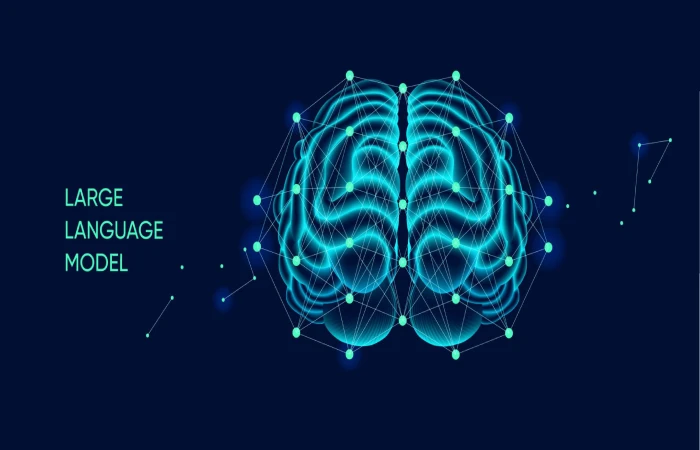
Unrestricted IA systems generally depend on machine learning, natural language processing and deep learning, which are all similar to artificial intelligence, for example.
LLM are at the heart of text-based AI. Developers of data centers have been told that they need to support large language models (or LLMs, a building block for text-based AI) for use cases like chatbots and writing tools. Broadly, LLMs figure out patterns by training on a huge amount of data.
Here is how the process generally works.
1. User types a Prompt
The journey begins when an individual supplies an instruction or question. Prompting can be a quick prompt, a lengthy sentence or a couple of directives concerning how to accomplish it.
Let’s say for an instance a user asks the AI system to generate a tutorial on the basics of renewable energy.
2. Natural Language Processing Interprets the Request
NLP gives the AI a better understanding of how the human language works. This involves examining keywords, relationships, contextual points and instructions.
This allows the system to infer what the user is trying to say rather than if it were just throwing out keywords.
3. The Language Model Generates a Response
The AI model predicts the most probable series of these words, based on the conversation that occurred to that point. It then produces that prediction in the form of a paragraph, a sentence, an answer, an explanation or whatever you indicate.
4. System Instructions and Safety Policies Apply
AI platforms can add additional guidance and moderation processes to determine what requests are possible.
In practice increased leniency for the platform might imply different handling for some conversational or creative queries, but the results would still fall within the safeguards and policies.
5. Users Refine the Output
After a reply is generated, a user can ask for it to be altered. This can comprise asking it to be more simple-language, more full, and/or with different illustrative examples and tone.
That’s exactly the kind of interaction that can make AI so practical for those repetitive editing jobs as well as those unique personalization jobs.
Important Features of Unrestricted AI
The features of Unrestricted AI depend on the platform and the underlying model. However, several capabilities are commonly associated with flexible AI systems.
Flexible Content Generation
The ability to generate numerous forms of written material is another significant feature of AI text generators. For instance, people can generate articles, stories, descriptions, explanations, emails, and summaries – among many others.
The style of writing is also flexible, depending on who and why it is being written for.
Customizable Writing Styles
Different modes of writing communicate ideas. You require an expert’s language when the reader is business. An imaginary story could have a great deal of imaginative as well as expressive language. Versatile artificial intelligent systems can adapt vocabulary, tone, sentence structure and formatting to suit customer’s command.
Creative Writing Support
AI can be employed by writers to build characters, come up with story concepts, compose dialogue, and even test out new storylines.
It can be particularly useful when authors get stuck, seeking fresh inspiration for their writing.
Conversational Interaction
Contemporary AI assistants can engage in dialogs Ask a follow-up question. Get a clarification. Work on what you’ve written.
Multilingual Content Generation
Many models are multi-lingual. Therefore it simplifies the process of translatinon, which allows us to generate multi-lingual content and to prepare communication in several language.
On the other hand, the translation precision can differ based on the language and issue.
Customization and Personalization
Some AI platforms allow users to customize instructions, preferred response formats, writing styles, and other settings.
This can help create a more consistent experience across repeated tasks.
Unrestricted AI vs. Traditional AI Tools
Although both approaches use artificial intelligence, they may differ in their level of customization, content policies, and intended applications.
The following comparison explains some general differences.
| Comparison Factor | Traditional AI Tools | More Flexible AI Tools |
| Content generation | Often follows predefined guidelines | May offer broader customization |
| Writing styles | Common predefined styles | Wider range of requested styles |
| Creative writing | Supports standard creative tasks | May support more experimental approaches |
| User customization | Depends on platform features | Often emphasizes flexibility |
| Content moderation | Platform-specific safety policies | Different moderation approaches |
| Conversational experience | Varies by application | May provide more adaptable interactions |
| Professional applications | Commonly supported | Depends on the tool and its capabilities |
For example, certain traditional AI tools are highly customizable, while others, as access to the technology has been marketed as unlimited, have shared things like user features and customization limits.
Perform research to determine the real capabilities of the products.
Common Uses of Unrestricted AI
The free Ai has many different usages, like: Ai unreferenced can be handy for numerous personal, scholastic, and professional uses, based upon the type of platform you select and the commands you also give.
Content Creation and Blogging
Digital publishers and bloggers are allowed to use AI to create article outlines, intros, headings, paragraph summaries, product descriptions, social media content. The content must be used responsibly.
For instance, a video blogger can utilize a text generator to structure topics for a post about AI, clarify technical processes, and draft content for the final article.
But the articles can sometimes need fact-checking and editing before publishing. Original research, interesting instances, and expert opinion bring value to the articles.
Creative Writing and Storytelling
Unrestricted AI can be used to generate imaginary stories, character sketches, voice and narrative prompts.
Writers have the opportunity to explore various genres, such as science fiction, mystery, fantasy, comedy, and historical fiction.
AI can propose different directions for a story if the original path isn’t working.
Education and Learning
Make use of AI to help students understand difficult concepts, summaries school work, and get writing practice.
Another way AI can be used by teachers could be to get a lesson plan, examples, and practice questions for the lesson.
When used appropriately, AI should supplement offshore educational sources rather than everything think in critical and independent learning.
Marketing and Advertising
With AI, a marketer can come up with ideas for their campaign, ad headline, email text, product descriptions, and advertising pitch.
It might be able to generate additional variations of marketing content for various consumers.
Businesses should be closely monitoring the output from AI to ensure inaccurate or misleading claims are not produced.
Business Communication
Use writing assistants for: emails, reports, proposals, and writing summaries of meetings, customer service responses.
You can ask for formal, friendly, brief, or detailed responses depending on the context.
Software Development
Other AIs can even generate code samples, understand code, troubleshoot issues, and give advice on documentation.
Employing the above qualities, programmers can discover how to acquire brand-new programming strategies and also work easier. The created code can be tested and reviewed prior to implementation to guarantee that the outcome is what it needs to be.
Benefits of Using Unrestricted AI
Unrestricted AI offers several potential advantages when used appropriately.
Improved Productivity
AI can shorten the time needed to prepare drafts, sort through content, and accomplish routine writing tasks.
For instance, instead of writing all the different headlines, a marketing manager can have that created for him or her in minutes.
More Creative freedom
Bloggers, designers and content writers can come up with many various thoughts and ideas without being constrained to one style of writing.
They can experiment with storytelling styles, tricks, formats and concepts to see what is going to be most successful.
Better Communication
Use AI to enhance your written communications. Individuals who are imperfect with grammar or paragraph structure can benefit from use of AI.
AI can rephrase complex sentences, check for language mistakes and simplify professional messages.
Assistance For Various Skill Levels
AI tools to give content at different levels of complexity. New user of product can learn by requesting a simple overview and experts by asking an in depth discussion.
Cost and Time Efficiency
Some AI platforms offer a feature allowing you to accomplish multiple things from one location. If it is available to you, it can eliminate the need for many other writing tools or productivity tools, depending on the type of plan you have.
Risks and Limitations of Unrestricted AI
Despite its advantages, Unrestricted AI also introduces challenges that users should understand.
Wrong Information & AI Hallucinations
No matter how many factual inaccuracies you may include in a statement, the LLM algorithm could generate an indistinguishable statement with inaccuracies too – an AI hallucination.
For example, the AI could give you a false statistic, invent a citation to a piece of research, or present out-of-date information.
Readers are advised to verify all facts by consulting a reliable source. A reference to the source has been included when relevant.
Privacy and Data Security
Other AI platforms are also tracked. Some platforms collect personal data, store chat history, or use anything users provide in accordance with their privacy policy.
Don’t post your passwords, banking information, corporate data or any sensitive information on any new AI platform.
Copyright & Intellectual Property
AI generated content will still have some of the same questions on copyright, ownership, originality, and reliance to other creative works.
Users must read the legal conditions of the platform and check whether or not a link, a response or an article that is generated displays work that is comparable to others.
Abuse of AI Technology
Increased latitude, however, can be used for malicious purposes such as generating false content, impersonation, or abusive content.
Responsible Ai platforms should have safeguards to mitigate these risks.
Reliance on AI
Over-reliance on the AI could reduce people’s independent thinking and writing skills. Users may accept the output of the system and do not check if the result is correct.
AI is only worth talking about if it helps human decision-making.
How to Choose the Right Unrestricted AI Tool
Choosing an AI platform requires careful consideration of its features, performance, privacy policies, and limitations.
| Selection Criteria | What to Check | Importance |
| Response quality | Accuracy, clarity, and relevance | High |
| Customization | Writing styles and adjustable instructions | High |
| Privacy | Data collection and retention policies | High |
| Language support | Supported languages and translation quality | Medium |
| Pricing | Free plans and subscription costs | Medium |
| Reliability | Consistent performance | High |
| Features | Text, image, coding, and document capabilities | Depends on requirements |
| Transparency | Clear terms and usage policies | High |
Prior to choosing a platform, evaluate it with common writing and research. Assess how effective responses are, review its privacy policy, and see if it provides the functionality you need. Never assume an unlimited service is one hundred percent reliable.
The Future of Unrestricted AI
In the coming years, Unrestricted AI will be shaped by the growth of large language models, generative AI, machine learning, and natural language processing.
AI is getting better at these capabilities, too, such as “comprehending longer conversations, following in-depth instructions and converting between formats.”
Other innovations include the emergence of multimodal AI. These types of AI systems are capable of handling multiple types of information, such as text, images, audio and video. The future of AI is providing creative and professional services.
Conclusion
The need to have a more open, personalized, as well as customizable synthetic intelligence experience. Innovative writing as well as blog writing, education, marketing, and also company communications are just a few of the even more functional opportunities these devices can be made use of to generate material as well as be productive.
But don’t forget that the flexibility doesn’t come at the expense of accuracy, privacy, authenticity and responsible usage. Remember that not all AI outputs are accurate, so double-check results before taking any important steps.
The optimal application of Unrestricted AI is to act as a kind of work buddy or helper to the creative or decision-making process. Flexible, ethical AI will probably play a growing part in our daily digital lives as AI technology advances.