
Last Updated: September 17, 2026
AI image generators are revolutionizing the digital art creation process for illustrations, marketing images, concept arts, social media images, and more. Rather than having to draw everything yourself, you give the tool an idea or concept, and the AI model will generate an image based on your input. For a broader understanding of the technology behind these systems, see what is artificial intelligence.
A common term being searched for is AI image generator no restrictions. Those that are searching for this are probably looking for a more unrestricted, unrestricted AI image generator, or AI image generator that has less restrictions.
But “no restrictions” is not always what it seems. Most real AI image sites have some measures in place and the list of restrictions varies for each service and model, which should be kept in mind before selecting one.
This Article Belongs to AI Tools
Table of Contents
What is an AI Image Generator With No Restrictions?
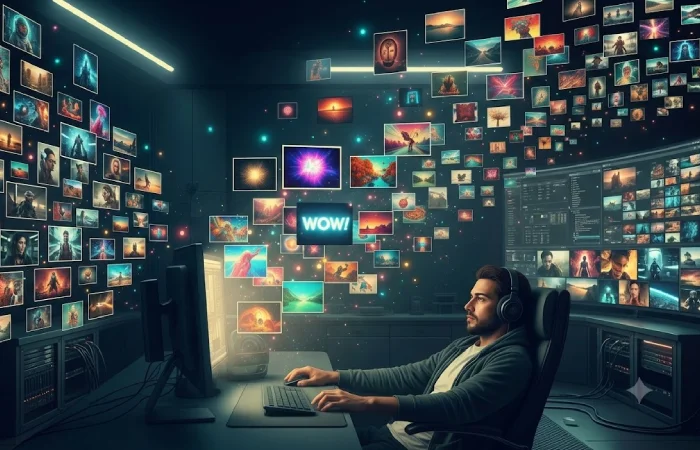
An AI image generator refers to software that uses a machine-learning model to create images from a text prompt, source image, or in any other way.
AI image generator no restrictions is not a technical classification. This term typically refers to a service or model that provides more freedom than heavily moderated image-generation engines.
For example, a tool may allow users to:
- Generate realistic or artistic images from text prompts
- Modify existing images
- Use custom styles or models
- Adjust image dimensions and quality
- Create fictional characters and environments
- Experiment with unusual or unconventional concepts
- Run certain open-source models locally
That does not necessarily mean that the service has literally zero restrictions.
Why Are People Looking for Unrestricted AI Image Generators?
Various users have various needs for more control. An artist might want to create a style that other popular services don’t support, a developer may want to try new ideas without running into false positives every time. Developers and researchers may also want access to models that can be configured more extensively.
Another reason is creative control. Hosted artificial intelligence services often apply their own content policies, while some open-source image-generation systems allow users to choose models and workflows themselves.
The distinction between a hosted service and a locally run model is therefore important.
Hosted AI Generators vs. Local AI Models
There are two broad approaches to AI image generation.
| Feature | Hosted AI Generator | Locally Run AI Model |
| Installation | Usually unnecessary | Usually required |
| Hardware | Provider handles computing | User generally needs suitable hardware |
| Updates | Managed by provider | User controls updates |
| Content policies | Usually platform-controlled | Depends on model and setup |
| Customisation | Depends on service | Often extensive |
| Technical knowledge | Usually low | Can be moderate to advanced |
| Cost | Free and paid plans vary | Software may be free, but hardware costs money |
| Privacy | Depends on provider | Local generation can reduce the need to upload prompts/images |
Local models can provide greater flexibility, but they are not automatically easier or completely unrestricted. Users still need to understand the model’s licence, configuration, hardware requirements, and applicable laws.
Popular Types of AI Image Generators
The AI image-generation landscape includes several different approaches.
1. Text-to-Image Generators
These systems create images based on written prompts. A prompt might describe a landscape, product concept, character, building, or abstract composition. The model interprets the instructions and generates an image matching the requested characteristics.
2. Image-to-Image Tools
Image-to-image systems use an existing image as a starting point. Users can change its style, composition, appearance, or other characteristics. This can be useful for concept development, design experimentation, and artistic transformations.
3. Open-Source and Open-Weight Models
Some AI image models provide downloadable model files or source components that can be used through compatible software.
These models can offer significantly more customisation than a typical web-based generator. However, “open” does not always mean completely unrestricted. Licensing conditions can still apply.
4. Local AI Image Workflows
Advanced users can run image-generation models on their own computers using compatible interfaces and workflows.
This approach can provide more control over model selection, settings, extensions, and image-processing steps.
What Does “No Restrictions” Really Mean?
This is one of the most important questions when evaluating an AI image generator. A platform advertised as “unrestricted” might simply have fewer prompt filters than another service. It might still prohibit certain uses through its terms of service.
There can also be restrictions imposed by:
- Copyright law
- Trademark law
- Privacy and publicity rights
- Platform terms
- Model licences
- Local regulations
- Computer or network policies
Therefore, users should avoid assuming that a tool described as “no restrictions” permits every possible use.
Advantages of More Flexible AI Image Generators
A less restrictive workflow can provide several practical benefits.
- Greater experimentation: Artists can test unusual concepts, compositions, and visual styles.
- More control: Advanced models may expose settings that are unavailable in simple consumer applications.
- Custom models: Some ecosystems allow users to work with specialised models or fine-tuned versions.
- Local processing: When generation happens locally, users may have more control over where their prompts and source images are processed.
- Creative workflows: Designers can combine image generation with editing, upscaling, compositing, and other tools.
Limitations and Risks to Consider
More freedom also creates additional responsibility.
Copyright and Ownership
AI-generated images can involve complicated copyright questions. The legal treatment of AI-generated material differs between jurisdictions and depends on factors such as human creative contribution.
Users should not assume that every generated image automatically receives exclusive copyright protection.
Privacy
You might upload pictures or other personal images to an online AI service. Make sure you’re okay with the company storing your data before you upload personal or sensitive material.
Deepfakes and Impersonation
Image generation tools can produce fake images of real people. Generating an impostor image of someone can be an ethical and legal problem.
Harmful or Illegal Content
The absence of a strong automated filter does not make illegal content lawful. Users remain responsible for how they use an image-generation system.
How to Choose an AI Image Generator
Rather than searching only for a tool claiming to have “no restrictions,” consider what kind of control you actually need.
| Requirement | What to Look For |
| Simple image creation | Easy web interface |
| Maximum customisation | Advanced model and workflow support |
| Local generation | Compatible downloadable model/software |
| Commercial projects | Clear commercial-use licence |
| Privacy | Transparent data and retention policies |
| High-quality artwork | Strong image model and resolution options |
| Editing | Inpainting, outpainting, and image-to-image features |
| Advanced control | Parameters, model selection, and workflow tools |
A clear licence and transparent privacy policy can be more valuable than a marketing claim about being “unrestricted.”
Tips for Better AI Image Generation
Even the most flexible generator depends heavily on prompt quality. Start with the main subject and then describe important visual characteristics. Mention the environment, composition, lighting, camera perspective, artistic direction, and desired output when those details matter.
For example:
Basic prompt:
“Modern city at night.”
More detailed prompt:
City street at night in the rain, neon signs reflecting on wet pavement, hooded pedestrians under umbrellas, cinematic view, intricate architecture, atmospheric lighting, photorealistic.
The second prompt informs the model much more about what it should output.
Is an AI Image Generator With No Restrictions Safe?
No, not always – it really varies according to the platform, model, software and what you intend to use it for.
The less automated filtering a generator offers, the more creative control you have, but it also puts more responsibility on the user. For a broader understanding of risks and responsible practices surrounding generative AI, readers can refer to the NIST Generative AI Profile, which provides guidance on managing risks associated with generative AI systems.
Final Thoughts
The term “AI image generator no restrictions” typically applies to image-generation systems that have fewer automatic content restrictions or more freedom for creative expression. It may apply to hosted solutions with looser guidelines, open models, or locally deployed AI pipelines.
“Unrestricted” Image Generation Is Not the Same as Use Specifically, there are still copyright and privacy issues as well as licensing, platform, and law considerations. The following can be easier to get started with as a novice: use a well-known, hosted generator with a well-established policy. More advanced content creators might want to try: local or open model workflows.